Grand Open! 🎉 Your first order will be 10% OFF! CODE: GRAND10
Circular Economy means a systems solution framework that tackles global challenges like climate change, biodiversity loss, waste, and pollution. It is based on three principles, driven by design: eliminate waste and pollution, circulate products and materials (at their highest value), and regenerate nature.
- Ellen Macarthur Foundation
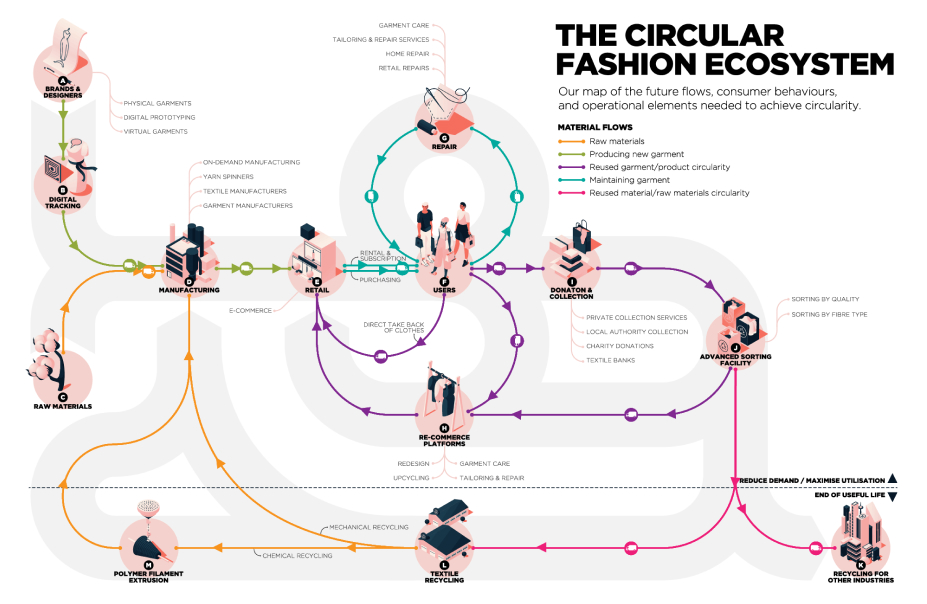
This is the illustration to explain how it looks when it comes to fashion and interior. Scrap Queen is committed to develop its business in line with the circular business model in order to achieve circularity in fashion and textile industry.
Textile 2030 is the UK’s leading voluntary initiative aimed at transforming the fashion and textiles industry towards sustainable, circular practices by the year 2030. It brings together major fashion brands, retailers, and other stakeholders to reduce the environmental impacts of textiles, with a focus on cutting carbon emissions, conserving water, and encouraging the reuse and recycling of textiles.
of new textile products, aligning with the goals of the Paris Agreement.
in water usage, addressing the high levels of water consumption in textile production.
such as designing for durability, increasing recycling efforts, and developing innovative business models like upcycling, repair, and rental services.
Textile 2030 also emphasizes collaboration across the industry, encouraging companies to adopt science-based targets and share their progress transparently.
By 2030, the program aims to make significant strides towards a climate-friendly, resource-efficient textiles industry in the UK.
For more information, you can visit the Textiles 2030 page.
Scrap Queen helps achieve Textile 2030 goals by reducing textile waste through upcycling. Our platform promotes a circular economy by extending the life of textiles and lowering the need for new production, contributing to reduced carbon and water footprints. We also encourage sustainable consumer behavior by offering eco-friendly, one-of-a-kind products, aligning with the initiative’s focus on circular fashion and reducing environmental impact.
Reducing Your Carbon Footprint by Upcycling Textiles

Every product has a hidden environmental cost, or carbon footprint, from greenhouse gases emitted during production, transportation, and disposal. The fashion industry, in particular, consumes significant energy and resources.
Upcycled textiles offer a sustainable alternative by reusing materials, reducing energy use, and preventing waste. Choosing upcycled products helps lower your carbon footprint and supports a circular, eco-friendly economy.
Reducing Your Carbon Footprint by Upcycling Textiles

Even with sustainable choices like upcycling, some carbon emissions remain inevitable, such as those generated from transportation, packaging, and other operational aspects. This is where carbon offsets works: it allows businesses and individuals to invest in environmental projects that reduce or capture CO2 emissions, compensating for the emissions that can’t be eliminated. These projects can include initiatives such as reforestation, renewable energy development, or carbon capture technologies that actively remove carbon from the atmosphere.
Reducing Your Carbon Footprint by Upcycling Textiles

The UK is committed to addressing climate change and has set ambitious targets to reach Net-zero carbon emissions by 2050, as part of the Paris Agreement. This requires a collective effort from businesses, individuals, and industries by contributions from every sector, including fashion and textiles. With the recognision of the need to reduce textile waste and promote sustainable consumption, industries are encouraged to move towards more circular business models, like upcycling, that minimise environmental damage.
By choosing sustainable options like upcycled textiles, you’re not only making a positive impact as an individual but also supporting the global goals of reducing greenhouse gas emissions and promoting a low-carbon economy.
Reducing Your Carbon Footprint by Upcycling Textiles
At Scrap Queen, we’re passionate about driving positive environmental change. Our marketplace focuses on upcycled textiles, offering products that give new life to pre-loved fabrics, preventing them from ending up in landfills. By promoting a circular economy, we aim to reduce the carbon footprint associated with traditional textile production.